


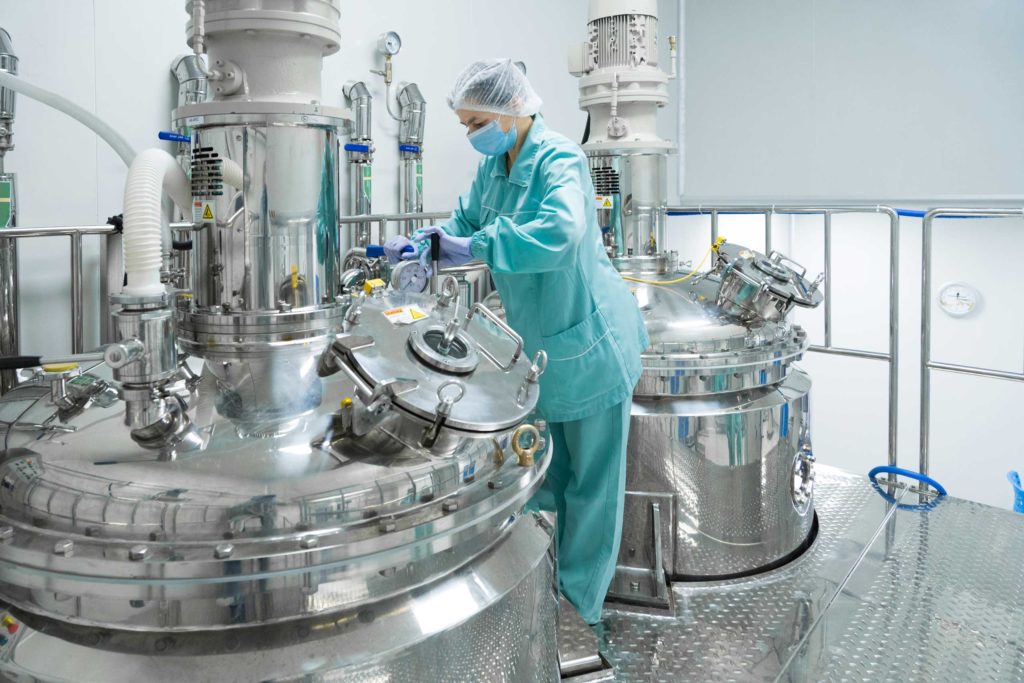


In large-volume parenterals (LVPs) and small-volume injectables, acetate salts serve as critical physiological buffers and metabolic precursors, offering a safer alternative to other standard anions.
Physiological buffering and metabolic support
While bicarbonate (HCO₃⁻) is the body's natural blood buffer, it cannot be readily used in all formulation concentrates or infusion bags because it tends to precipitate with calcium or magnesium and can release CO₂, thereby altering the solution's pH.
Sodium acetate trihydrate acts as a stable, highly soluble alternative.
Once infused, it is metabolized by the liver, muscles, and peripheral tissues into bicarbonate on a 1:1 molar basis, safely correcting metabolic acidosis without compromising formulation stability.
Balanced electrolyte solutions
Prolonged infusion of standard saline solutions can lead to hyperchloremic metabolic acidosis due to an excess of chloride ions.
To mitigate this risk, modern balanced electrolyte solutions (e.g. Ringer's Acetate) replace part of the sodium chloride with sodium acetate trihydrate. Furthermore, potassium acetate, magnesium acetate tetrahydrate, and calcium acetate are used in customized pharmaceutical formulations to provide essential macro-minerals in a chloride-free matrix.