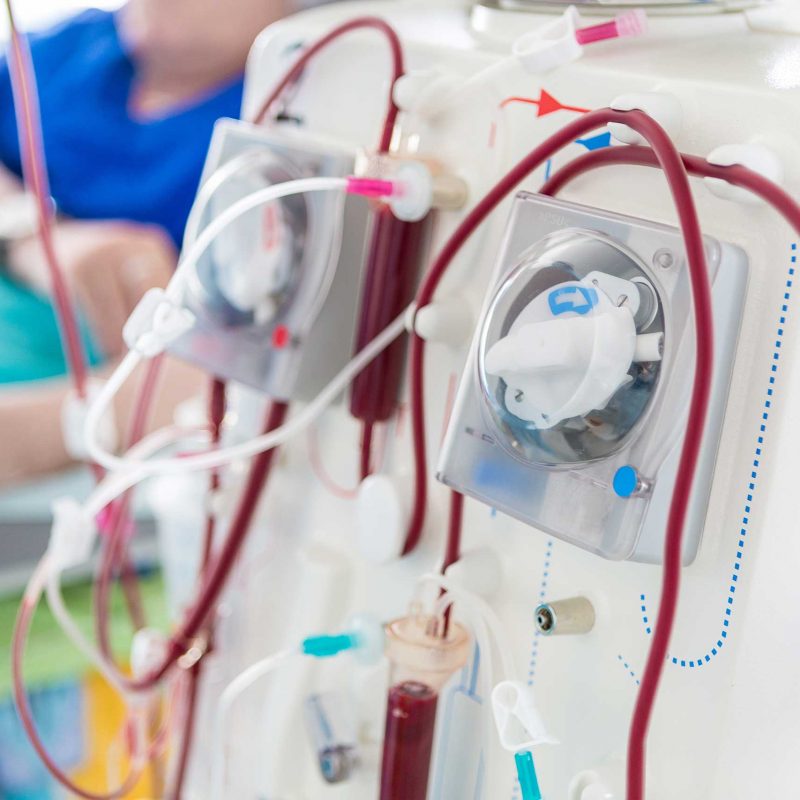




Hemodialysis and peritoneal dialysis require precise control of electrolyte balance and acid–base homeostasis to compensate for impaired kidney function.
Stable acid concentrate systems
Dialysis is performed using multi-part systems, typically consisting of an acid concentrate and a bicarbonate concentrate, which are mixed online by the dialysis machine.
Because bicarbonate rapidly precipitates in the presence of calcium and magnesium ions within the acid concentrate, sodium acetate trihydrate is added to the acidic component.
It stabilizes the pH of the concentrate during storage and provides a safe, predictable source of acetate ions that contribute to blood buffering during the dialysis session.
Dry dialysis concentrate systems
The shipping of heavy liquid dialysis concentrates is increasingly being replaced by dry powder cartridges that are dissolved online.
Sodium diacetate is an ideal excipient for these dry systems.
Because it is a crystalline, free-flowing molecular compound of sodium acetate and acetic acid, it delivers both the necessary acetate buffer salt and the solid-state equivalent of volatile liquid acetic acid in a single, stable, dry format.